


CHANGES TO ENERGY PRICE CAP FROM JANUARY 2024 – WHAT DOES THIS MEAN WHEN HEATING OUR HOMES?
As we celebrate the New Year and are looking forward to seeing what 2024 will bring – unfortunately for most households, the struggle to heat homes now comes at a higher cost as we are hit with the news that the Energy Price Cap has been raised. But what does this mean when it comes to keeping warm? Here is a breakdown from the Ofgem Government website:
“From 1 January 2024, for a typical user paying by direct debit, the unit rate will be 29p/kWh for electricity and 7p/kWh for gas. The average daily standing charge will be 53 p/day for electricity and 30 p/day for gas.
The increase in the price cap is because the cost of wholesale gas has gone up in recent months. This is due to world events including the conflict in the Middle East.”
With this in mind… How efficient and cost effective is air conditioning when pitched against the traditional boiler system?
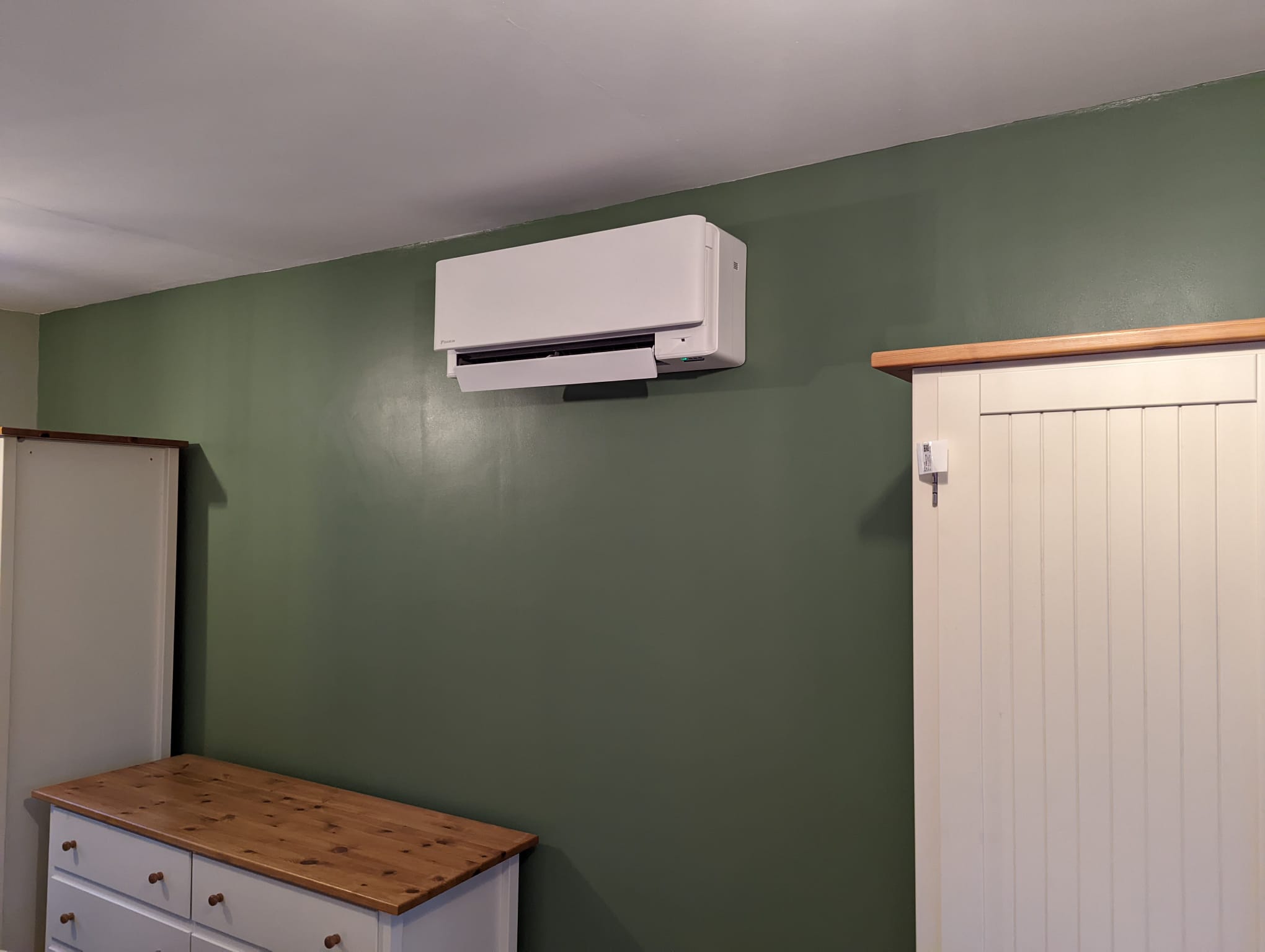
The most common used technologies for creating the perfecting temperature in our homes are boilers and air conditioning systems. While boilers are traditionally used for heating and air conditioning systems for cooling, newer and more efficient air conditioning systems can be used for both heating and cooling!
One reason why air conditioning can be more cost effective is due to the efficiency of the equipment itself. Modern air conditioning is designed to use less energy at both heating and cooling through technologies like heat pumps. Transferring heat from outside to the inside of buildings, making it up to three times more efficient than traditional heating.
Another advantage of air conditioning is the ability to control temperature on a room-by-room basis. By the use of much smaller units than traditional radiators. With central heating, the entire building is heated to the same temperature, which results in wasted energy and higher bills. A/C systems are also designed with individual units per room, allowing occupants to control the temperature in each space. This not only increases efficiency but also provides a more comfortable living space.
The Proof: Air Conditioning Efficiency Customer Reviews
Here are just a few of our amazing reviews from our customers! They got in touch to let us know the benefits of Air Conditioning in their own home.
“The service was excellent and the price was very competitive. Kane and the team were very professional and knowledgeable. They did a great job of explaining all of the features of my new air con unit which as a result saved me space and extra radiator costs in my new loft room – as the air con unit does it all!” – J Francis.
“What I have noticed after having the Mitsubishi Heavy Industries multi split system installed by Trent Refrigeration back in December 2022, is that the whole house is a lot warmer now with less localised heat spots and overall it is financially costing a bit less to heat the house to 20oC vs a 5 year old combination gas boiler. We are seeing around 20kwh of electricity usage per day in the peak of winter (* around 2-3oC external temperature) to run the heating 24/7 using the AC units whereas the gas boiler would use around 80kwh of gas to do the same job with the same external temperature. Therefore the coefficient of performance is around 4.0, which is great performance!” – C Neville.
“The installation of the HVAC went very smoothly and it is a neat job. The guys were considerate and fully cleared up after themselves.
I have been very impressed by the system performance. At the time of writing this has been in heating mode and is especially positive as I have been using spare electricity from the solar panels.” – C Lucas.
If you would like to upgrade your living space but would like to talk through budget, aesthetics or even if Air Conditioning is right for you then get in touch! Our team of experts are waiting to guide you through your options and a no obligation survey and quote!
https://trentrefrigeration.co.uk/air-conditioning/home-air-conditioning/
info@trentrefrigeration.co.uk
Info sourced from
https://www.ofgem.gov.uk/publications/changes-energy-price-cap-1-january-2024


